By Devin Smock October 14, 2026
Most of what I publish under Critical Screening is a review. This is not one of those. Consider it a special edition, or maybe just me seeing a group of filmmakers try something difficult and wanting more people to see what they made.
DORIS is a creepy, good little found-footage horror short. It runs three minutes and gets weird before getting out. There is also a 34-minute behind-the-scenes video about how they made it, which sounds ridiculous on paper. A making-of ten times longer than the movie. But that process is why I wanted to write about it and share both videos.
Writer, director and editor Katy Joy made DORIS for the 2026 Georgetown Super 8 Film Festival in Seattle. T.K. Johnson shot and colored it. The festival supplied a selection of cameras, the filmmakers bought one roll of Super 8 and had to build a finished movie inside that roll. Three minutes. Chronological order. No rearranging the footage later because what they shot, in the order they shot it, was the movie.
No pressure.
They picked a camera named Doris. Of all the available cameras, this was apparently the one with the ugliest, most distorted test footage. The festival organizers advised them to pick another one. Naturally, they took Doris.
That decision gave the film its name and, more importantly, its personality.
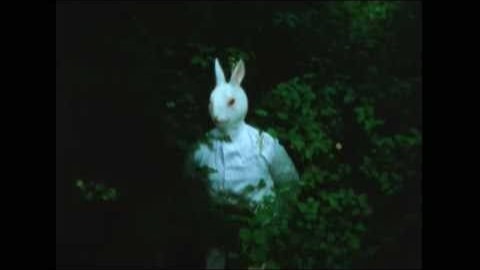
The setup is simple. In July 1979, four college students disappear in the woods near Forks, Washington. Ten years later, their Super 8 camera is found and the footage is developed. The footage shows two couples following Doris, played by Hailey Stubblefield, into the woods because she believes something is out there. Something involving a pair of deeply unpleasant rabbit masks.
We have seen the recovered-footage setup before, of course. Four young people entering the woods with a camera is not exactly undiscovered territory after The Blair Witch Project. DORIS does not reinvent that story in three minutes. It does understand why the form still works.
Super 8 makes the images feel recovered before the title card ever has to explain them. The colors, soft detail, exposure shifts and nervous handheld movement are not digital footage wearing an old-film costume. The camera is actually fighting the people using it. That instability gives the short a little sickness around the edges, like the footage might rot while you are watching it.
The period car, wardrobe and hair do enough to sell 1979 without turning the movie into a prop-house tour. The performances are loose in a way that mostly fits home-movie footage. The dialogue establishes the group and gets them into the woods quickly. Then the rabbit figures appear, the camera begins moving faster and the limitations start working for the horror instead of against it.
Are the rabbit masks the most terrifying thing I have ever seen? No. They are cheap, strange and just silly enough to become unnerving when they are standing still between trees. A clean digital close-up would probably expose them. Super 8 lets them remain shapes first and costumes second. Sometimes not seeing the thing properly is the whole damn trick.
The short was written the night before and shot in roughly six hours. That sounds reckless because it was. Still, the behind-the-scenes video shows that the crew did not simply point an old camera toward the woods and pray for atmosphere. They rehearsed blocking, measured light, worked out camera handoffs and designed transitions before burning film. They had one roll. Every second used on indecision was a second removed from the movie.
The camera did not care about their schedule, confidence or whether somebody wanted one more take. It just ate film.
That is what I found most interesting as a filmmaker. Digital cameras are generous. Sometimes too generous. We can roll through rehearsals, check a monitor, adjust the frame, do it again, grab coverage and promise ourselves we will discover the scene in editing. I have done it. Most filmmakers have. Access to more footage can save a movie, but it can also postpone decisions until everybody is sitting in front of a computer asking what the scene was supposed to be.
DORIS did not give them that escape hatch. The crew could rehearse, but once the camera rolled the decision was made. They could not watch playback. They did not even know whether the camera had exposed the footage properly. After the shoot, they waited about four weeks for the scans and watched the silent images for the first time around a bonfire.
I love that. I would also hate it.
The camera's bad reputation turned out to be more useful than accurate. Johnson shot manually and used a light meter, and the footage came back far cleaner than the festival's test suggested. The filmmakers believe the earlier problems came from using the camera in automatic mode. Still, the uncertainty mattered. It changed how they prepared and how carefully they used the roll.
Sound was added after the scans came back, which is another useful reminder that shooting on film does not require pretending post-production stopped existing in 1979. The final short combines the physical image with a modern sound edit. You get the texture and unpredictability of Super 8 without turning the entire production into historical reenactment.
I also appreciate Joy being honest about the festival path after the movie premiered. She considered submitting DORIS elsewhere, looked at what festivals cost and decided she would rather put the film on YouTube where people could actually see it. There is an entire other article hiding in that decision. A laurel is nice. An audience is also nice.
By the end of the making-of video, I was thinking less about whether DORIS is a great short and more about what Super 8 could do for something made with Subterranean. A music video seems like the obvious place to try it. Maybe a very short horror film. Something planned hard, rehearsed harder and built around the fact that the camera is not going to forgive us.
The part that stops the fantasy from becoming tomorrow's production plan is processing the damn film. Buying the stock is one thing. Sending it away, waiting weeks for the development and scan, and having no idea whether we got what we needed is another. That uncertainty is part of the appeal when I am watching somebody else do it. It becomes a little less romantic when it is my footage in the envelope.
Still, DORIS makes the argument better than any nostalgia speech could. Super 8 is not interesting because it automatically turns a movie into 1979. It is interesting because it changes the behavior of everybody making the movie. Fewer takes. More rehearsal. Real commitment. A mistake does not become content for the blooper reel. It becomes part of the film, or it kills the film.
DORIS is small, handmade and built around a familiar found-footage setup. It also has a couple genuinely creepy images and filmmakers using the format instead of simply admiring it. Super 8 does a fair amount of the heavy lifting, but choosing the right tool and understanding what it can do for your story is part of directing the movie.
More importantly, the whole thing made me want to pick up a Super 8 camera and make something. That is about the best compliment I can give another filmmaker's work.
Then I remembered the processing again.
Watch DORIS and How I Shot a Horror Film on Super 8 on the Filmmakers Green Room YouTube channel.