By Devin Smock Critical Screening
SPOILERS THROUGHOUT
I spent the opening weekend hoping You Can See Everything might take off and become available somewhere near Jacksonville or even Springfield. It did not. It stayed in the metro areas, I could not get a screener and I had to wait another week while everybody else started talking about it.
I tried to walk in with as few preconceived notions as possible, but that gets harder once a movie has been out for a week. The other thing I had to wonder was how in the hell an Elizabeth Holmes documentary could last almost three hours.
Before it even started, I caught myself doing prison math. Holmes has now been inside for more than three years. How does good time work? Could she get parole in a few years? Apparently traditional parole is not a thing for modern federal sentences, but the thought shows where my head was. I expected a fairly conventional documentary about Theranos, the conviction and what happens next.
That is not this movie.
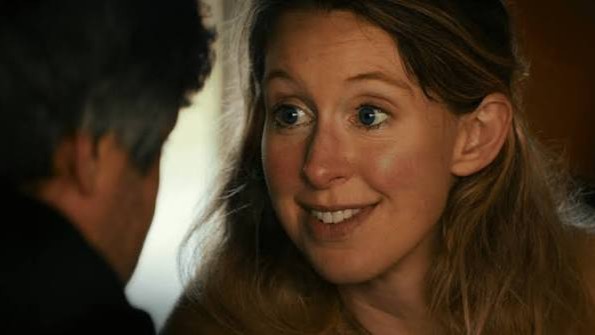
Nathan Fielder and Lance Oppenheim begin 34 days before Holmes reports to federal prison. She and her partner, Billy Evans, have invited them into a rented beach house in Del Mar, where they are living with their two young children. Billy calls it radical transparency. The filmmakers can stay in the house, follow them around and see everything. The hope, obviously, is that the audience will finally see the real Elizabeth Holmes instead of the version created by headlines, court coverage and The Dropout.
Sure.
Fielder starts from a much less comfortable place. Holmes was convicted of defrauding investors. He says so plainly. She responds by talking about her truth, her family and everything being taken away from her. Then comes the tissue. Fielder awkwardly offers her one, and I immediately found myself wondering if I was looking at a victim or a master manipulator who knew exactly when a tissue would enter the scene.
Then Billy starts talking about what is basically Theranos 2.0.
The timing is incredible. We have barely had time to process Holmes crying over the company that helped put her in prison before the couple is discussing another medical-testing idea. Later we see calls and technical conversations around it. Holmes speaks as if inventing will continue even from prison. I kept wondering whether the court had legally stopped her from returning to this kind of work. The answer, at least in the movie, appears to be no.
Then they make eggs.
Holmes starts whisking. Billy decides she is doing it wrong and takes over. It is a tiny moment that becomes hard to forget. Is he helping? Is he controlling? Is she allowing him to take control because it makes her appear helpless? Have I already become so suspicious of these people that I am treating breakfast like the Zapruder film?
Probably all of the above.
Fielder is exactly the right interviewer for this because he does not decorate his questions. Billy explains how he met Holmes and fell in love with her, and Fielder basically asks the question sitting in everybody's throat. You chose this?
He asks if Billy ever worried that a woman convicted of fraud might be interested in his wealthy family. He asks Holmes if she committed a crime. He pushes both of them on the difference between a lie, a misunderstanding and language designed to leave enough room for a later excuse. His honesty and bluntness are funny, but the questions are not jokes. He gives people just enough silence to keep talking, which is usually when the answer gets worse.
The conversation with Billy while Holmes is away on a legal call is one of the first real cracks in their shared version of things. Billy admits he lies in ordinary life. Holmes, he claims, does not. She is literal. She thinks differently. He says this like it settles the matter.
It does not.
Fielder eventually shows Holmes Abbott and Costello's “Who's on First?” routine, but it is not a random test of whether she understands comedy. It follows their argument over the way she described Theranos technology. Holmes insists she was speaking clearly when she said a single device could run any test. Fielder thinks the wording is confusing to an almost comic degree, so he uses the routine to show her what he means.
She says she understands that the men are talking past each other, but she does not understand the actual joke. Even after Fielder explains that “Who” is the player's name, she still cannot see why the original exchange was confusing.
It is funny. Then it is weirdly sad. Then it becomes evidence, although I am not sure of what.
I had the same impulse I think a lot of people will have. There must be a diagnosis behind those eyes. Narcissism, psychopathy, autism, something that turns this person into a solved problem. The movie does not give us enough to do that, and neither does one comedy routine. What it does show is someone whose relationship to language seems fundamentally different from Fielder's, or someone performing that difference because it creates doubt. Maybe it is both. I do not know.
“I know what you're feeling.”
“No, you don't.”
Great.
The film looks much better than most documentaries built around people sitting in rooms. Cinematographer David Bolen uses the boxier frame to keep faces dominant and relationships tight. The slow moves inward are specific to the moment. The camera is not simply collecting information. It is watching for the instant a story changes.
The beach house should feel open and expensive and peaceful. Instead, it starts to feel like a horror location. Ari Balouzian's score helps, but it never has to scream that something is wrong. A quiet room, a long pause and Fielder staring at somebody are enough. There are stretches where this genuinely feels like a psychological horror movie about a family that invited a camera into the house and may not understand what the camera can see.
The parents arrive after the “Who's on First?” scene, and the movie shifts from Holmes's language to the history her family uses to explain her. Her father says he believes things changed after what Holmes has described as a rape at Stanford and after Sunny Balwani entered her life. Billy interrupts and tries to control where the conversation goes. The whole scene is horribly uncomfortable, partly because these are serious allegations and partly because every person in the room seems to be fighting for ownership of Holmes's story while she sits there.
The Sunny material matters. Holmes alleged that he abused and controlled her. The movie does not use that to declare her innocent of what happened at Theranos, and it should not. Someone can manipulate people and still be manipulated by somebody else. Guilt in one part of a life does not make victimization in another part impossible. That is where the film starts becoming much more complicated than another portrait of a famous fraudster.
Then Holmes watches The Dropout.
Seeing a person watch a successful actress perform a version of her life is strange enough. Watching Holmes break down during the Sunny scenes makes it even harder. Is the series wrong? Is Holmes reacting to a real trauma, a false portrayal or the loss of control over her own image? Again, I do not know. The only easy answer is that scripted television has become reality for a lot of people who watched it, which becomes important later when Amanda Seyfried enters the actual movie.
Before prison, Holmes also has her body scanned in three dimensions. At first I was not sure what all the photos and scanning were about. It is meant to create a digital version of her, something that can still read to her children while she is gone. That is sad. It is also creepy as hell. Holmes talks about how other people have used her image, especially the famous photograph of her holding the vial of blood. The movie quietly plants that concern and waits. It will matter later.
The rented beach house also raised the obvious question of money. Holmes and Billy talk as if resources are limited, but they are still living on the beach. Billy comes from a wealthy hotel family, although the exact financial arrangement around their life remains fuzzy. Money keeps sitting in the corner of the frame even when nobody wants to look at it.
Then Holmes leaves for Federal Prison Camp Bryan in Texas. Billy and the children move closer to her. Collective Soul finds its way into the movie. The whole thing is sad, bizarre and just normal enough to be worse.
At that point I looked at the runtime in my head and thought, what now? The main subject is in prison and there is still a large part of the movie left.
TWO YEARS LATER.
Billy has gone wild.
The first thing we see is not Holmes. It is Billy's new medical-testing company, Haemanthus, and another attempt to build laser-based diagnostic technology. Fielder interviews an engineer involved in the project, and the conversation starts moving toward whether Theranos made promises its technology could not fulfill. The engineer makes a point that is uncomfortable but not entirely wrong. Musk, Gates and plenty of celebrated business people sell futures that do not exist yet. Silicon Valley has spent years teaching us to call an unfulfilled promise vision when the right person says it.
That does not make Theranos honest. It does expose the selective way we decide who is a genius and who is a fraud.
Billy does not like where the interview is going. He comes in angry and shuts it down. The man who wanted radical transparency now wants the cameras off.
Then came the billboards. They feature the same image Holmes said had been used against her and send people to TheInventors.com. What in the actual fuck is TheInventors.com? Fielder asks whether Billy has anything to do with the man behind the campaign, Ryan El-Hosseiny. Billy distances himself from it. Then he takes a call from Ryan and admits they have been talking.
That is the point where Billy stopped looking merely protective and started looking like another person trying to manage Holmes as a product.
Now Amanda Seyfried enters the movie, and the fourth wall collapses onto everybody.
Fielder shows Seyfried footage of the real Holmes watching The Dropout. Seyfried played Holmes in that series, but she never met her. Now she is watching Holmes react to a performance built from depositions, reporting and dramatic invention. Amanda starts as an observer, then becomes Fielder's partner in figuring out what Billy is doing, and finally becomes Holmes again in reenactments of moments the cameras could not capture.
Christopher Abbott plays Billy in those scenes. It sounds like a gimmick. It is not. The reenactments openly admit that every version of this story is constructed. The Dropout constructed Holmes. Billy is constructing Holmes. Fielder and Oppenheim are constructing Holmes. Even Elizabeth Holmes is constructing Elizabeth Holmes.
The most important reenactment reaches back to a meeting before filming began. Holmes, Billy, the filmmakers and A24 executives sit around a table. Holmes leaves to check on the children. Once she is out of the room, Billy asks for a share of the documentary's profits. The filmmakers object because paying a subject like that threatens the credibility of the whole project. A deal is made anyway.
Later, before going to prison, Holmes says on camera that she has no financial interest in the movie. Did Billy never tell her? Did she know a discussion was coming but keep herself out of the room so she could say she was not involved? Is she being managed, or is this how she manages not to know?
Welcome back to the lawyer thing. Create doubt. Leave enough space between “it” and “something” to live there forever.
Amanda goes with Fielder to Billy's home, and this section gets more uncomfortable by the minute. Billy puts Holmes on the phone with the children and Amanda unexpectedly speaks to her. Amanda, who has been skeptical and sharp, suddenly sounds overwhelmed. Of course she does. It is one thing to discuss Elizabeth Holmes as a character. It is another to hear the actual person from prison.
Then we learn Billy has been posting from Holmes's social-media account. Some posts come from things she emails him. Some do not. He has power of attorney and describes it as authority to do almost anything on her behalf. Amanda tells him that his profanity and attacks do not sound like Holmes. Billy says she would find them funny.
Power of attorney. Wild.
At Billy's home, the earlier body scan comes back too. The sad idea of preserving a mother for her children has become an AI version of Elizabeth Holmes that can say things she never said. Billy treats this as inevitable. People will make fake images anyway, so why not create the best version first? That logic is insane. It is also very 2026.
This is where I started feeling sorry for Elizabeth Holmes, which was not somewhere I expected this movie to take me. That does not mean I decided she was innocent. It means that Billy's control over her image, words, money and access to the outside world is disturbing on its own terms. Holmes can be guilty of fraud and still be trapped inside somebody else's version of her.
The movie is careful enough to make that sympathy unstable. Billy claims Holmes approves. Holmes later claims she trusts him. Maybe she does. Maybe the two of them are performing separate parts of the same act. Maybe their relationship is real and unhealthy and loving and manipulative at the same time. Human beings are inconvenient that way.
Fielder finally tries to establish a direct line to Holmes, but prison calls are limited and Billy keeps standing between them. Amanda challenges Fielder too. She wonders if he has become protective of Holmes and is now arranging the evidence around that feeling. Good. He has spent the entire movie asking people whether they are lying. Somebody needs to ask him what story he wants to be true.
Nathan and Lance deserve credit for keeping that challenge in the film. They are not saints descending into this family with an objective camera. They choose what we see, where the music enters, which contradiction comes next and when Billy starts to look like the villain. Their movie can manipulate us while documenting manipulation. That does not make it dishonest. It makes it a documentary willing to admit the problem.
By the time Holmes calls and tells Fielder to visit, I was waiting for the prison conversation like the climax of a thriller.
Go to the prison, man.
He does. Cameras and recording devices are not allowed inside, so Seyfried plays Holmes again while Fielder reconstructs the visit. Holmes complains that people in prison treat The Dropout as if it were a documentary. She says the show has become more real to them than she is. Seyfried bristles at the idea that the series simply lied, then has to perform Holmes saying it. There are so many layers at this point that the movie should collapse. Somehow it does not.
Fielder asks what Holmes knew about Billy's profit deal. She says she knew he was talking to them about it. Or maybe she says he was talking to them about something. Fielder is not completely certain afterward, and one word changes the implication. If she knew about “it,” she may have kept her hands clean while Billy negotiated. If she only knew about “something,” maybe he did it without her.
The real fucking climax is a pronoun.
Holmes says Billy's decisions are his world and that their finances are separate, even though they share children and whatever money he makes affects their life. She says she owes hundreds of millions in restitution anyway. Fielder tells her about the social account, the billboards and the AI version of her. She does not turn against Billy. She describes their love as something almost spiritual.
Then Billy arrives with the children, Holmes embraces him and Fielder believes the emotion is real.
Amanda is not convinced that his judgment is clean anymore. Neither was I.
That is what the movie keeps doing. It flips. Holmes looks manipulative, then Billy looks controlling. Billy looks controlling, then Holmes appears to approve what he is doing. Fielder finds a contradiction, then Amanda finds one in Fielder. The Dropout looks irresponsible for becoming truth in the public mind, then this documentary uses an actress and reenactments to create another truth.
Seyfried eventually gives the only answer that does not fall apart: it is very complicated.
Yes, Amanda. It is.
The film's greatest strength is also the thing that makes me a little uneasy. It spends nearly three hours making Holmes mysterious again. That can pull attention away from the people harmed by Theranos. Investors lost money. Employees were threatened. Patients made decisions around medical information they had every reason to believe was reliable. Whatever happened between Holmes, Sunny and Billy does not erase them.
I also think the film occasionally treats every contradiction as if it opens another door into the human soul. Sometimes people change their stories because they are lying. Sometimes control is just control. Not every missing answer is profound.
Still, the length is justified because the movie has to change shape. A shorter version ends when Holmes goes to prison and becomes another strange profile of a disgraced public figure. Instead, her absence creates the real movie. Billy takes control of the story. Amanda enters it. The filmmakers become characters. By the end, the question is no longer whether Holmes is telling the truth. It is whether any person inside this thing still owns his or her own version of the truth.
The final title cards do not rescue us. Billy gives up the profit-sharing arrangement before release. The New York Times reporter stands by the disputed quote that Holmes and Billy insist she never said. One point for each side, I guess. Nobody wins.
You Can See Everything is one of the better documentaries I have seen in recent memory. It does not prove Holmes is innocent, and it does not pretend she is only a monster. It reveals credible reasons to worry about Billy without pretending that makes Holmes honest. It shows how a scripted series can replace a real person, then questions whether a documentary can ever avoid doing the same thing.
I do not know whether Elizabeth Holmes is manipulating, being manipulated or moving between both roles depending on the moment. I do not think Fielder and Oppenheim know. I am not convinced Holmes knows either.
I cannot wait to watch it again.
8.1/10
You Can See Everything opened in theaters on October 16, 2026.